AI for Social Impact

Understanding Human Experience Through Technology
My work in AI for social impact began with a simple observation: many of the most important aspects of human experience are difficult to capture through traditional data systems.
Communities often share rich stories about trust, aspiration, uncertainty, exclusion, and decision-making. Yet these insights frequently remain fragmented across surveys, reports, and videos, making them difficult to systematically learn from and incorporate into policy and program design.
This realization led me to explore a broader question: How can AI help organizations better understand the lived experiences behind the data?
Over time, my efforts evolved from an interest in storytelling and community voice to a deeper exploration of qualitative data, human-centered technology, and the role AI can play in helping organizations capture, analyze, and learn from complex human experiences.
Rather than viewing AI primarily as a tool for automation, I am interested in how it can help surface overlooked realities, strengthen understanding between institutions and communities, and support more informed and inclusive decision-making.
The goal is not simply to collect more information, but to better understand the people and contexts behind it.

Key Collaborations & Learning Partners
This work has been shaped through engagement with a diverse network of practitioners, researchers, technologists, journalists, and social impact organizations.
Notable collaborations and learning experiences include:
Video Volunteers — Community journalism, community voice, and participatory storytelling
10x Impact Labs — AI for Social Impact Fellowship
Fields of View — Participatory systems thinking and governance
IDInsight — Data collection, evidence generation, and decision-making
Ooloi Labs — Technology and development innovation
Researchers, field enumerators, nonprofit leaders, and grassroots practitioners across India
These engagements have provided valuable insight into how information is collected, interpreted, and used across development ecosystems.






Research Conversations & Field Perspectives
A significant portion of research work has been informed by conversations with technology experts, field practitioners, and social impact leaders working at the intersection of technology and human development.
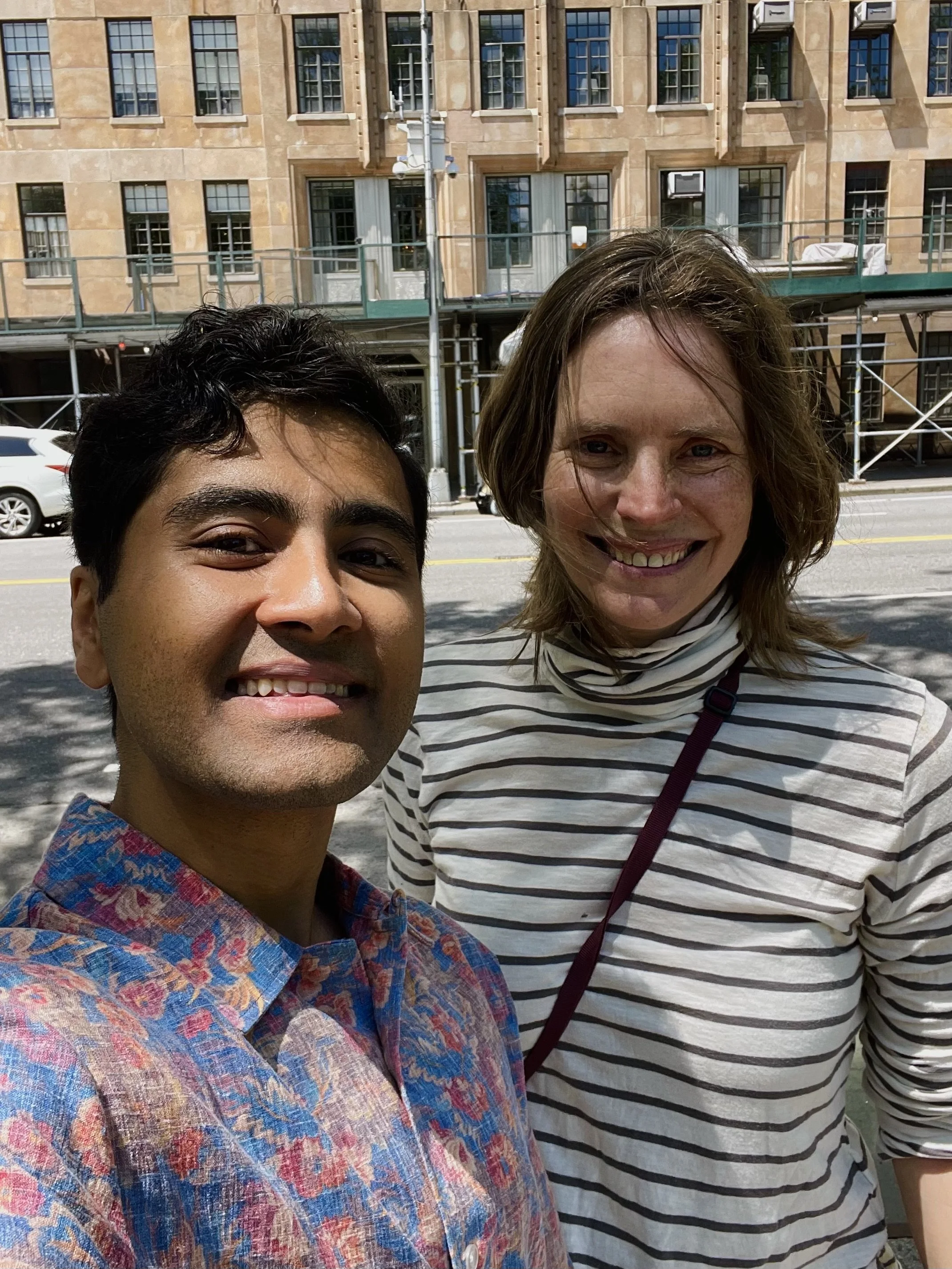
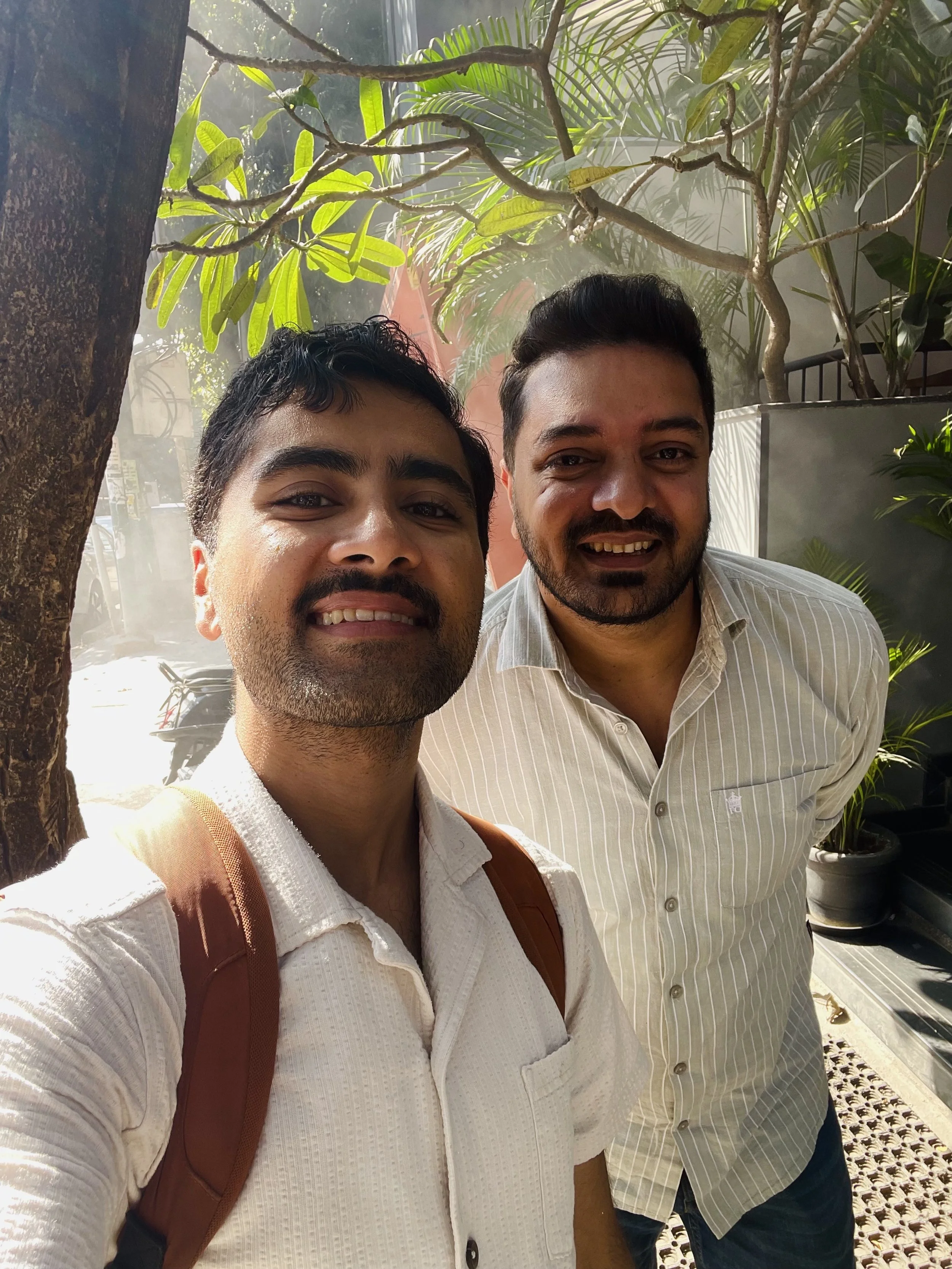
Jessica Mayberry, founder of Video Volunteers, has dedicated her work to strengthening community-based journalism and ensuring that the voices of marginalized groups are heard. Engaging with Video Volunteers has been among my most impactful and rewarding experiences, and Jessica’s mentorship has been instrumental in shaping my thinking on community voice, storytelling, and ethical engagement.
Vaibhav Mishra, co-founder of 10x Impact Labs, leads work at the intersection of A.I., data systems, and social impact. Through 10x Impact Labs’ A.I. for Impact Fellowship, I developed a strong foundation in systems-oriented approaches to designing A.I.-enabled data collection tools for understanding the lived experiences of rural and underserved communities. Vaibhav’s guidance and mentorship have been instrumental in shaping this work.
During a discussion I hosted in Bangalore on the role of technology and A.I. for rural data collection, Jahnavi Meher (Product Manager, IDInsight) reflects on how gendered power dynamics within households often limit women’s ability to participate in data collection processes. This insight mirrors broader field observations that structural and social constraints, rather than technical access, frequently determine whose voices are heard.
Read more here:
https://www.linkedin.com/feed/update/urn:li:activity:7427935510695854080/
Kartik Natarajan (Co-Lead, Fields of View) highlights how data collection practices are inherently shaped by power and intent, and why communities may resist engagement when these dynamics are overlooked. His reflections underscore why responsible A.I.-enabled data collection must prioritize human judgment, ethical design, and trust over scale or automation.
Read more here
https://www.linkedin.com/feed/update/urn:li:activity:7417565492640522240/

Key Research Insights
Across interviews, field observations, events, and collaborations, several themes have consistently emerged. Together, these observations have shaped how I think about AI, community engagement, and evidence generation.
Participation is Social Before Technology
- Access to technology alone does not guarantee meaningful participation. Trust, household dynamics, gender norms, time constraints, and local context often play a greater role in determining whether people engage.
Data Collection is Relational
- High-quality information depends on relationships. Field enumerators, community journalists, and local facilitators remain essential for building trust, understanding context, and creating conditions for meaningful participation.
Qualitative Insight is Difficult to Scale
- Organizations collect rich information through interviews, surveys, videos, and field observations, yet synthesizing and learning from these datasets remains a significant challenge. Valuable knowledge often becomes fragmented across projects and institutions.
Trust Shapes Data Quality
- Communities are more likely to participate when they understand how information will be used and see tangible value from sharing their experiences. Transparency and accountability are central to meaningful engagement.
AI Adoption is a Human Challenge
- Many organizations recognize AI’s potential but face barriers related to organizational readiness, workflows, capacity, and trust. Successful implementation depends as much on people and processes as it does on technology.
Understanding Matters More Than Collection
- Many institutions already possess vast amounts of information. Increasingly, the challenge lies not in collecting more data, but in transforming existing knowledge into actionable understanding.

Evolution of Thinking
My perspective on AI for social impact has evolved through conversations, field research, and collaboration with organizations across India. Each stage raised new questions and gradually shifted my focus from technology itself toward understanding how people create, share, and learn from knowledge.
Phase 1 — AI-Enabled Community Data Collection
- Initial work explored how conversational AI and messaging platforms could support community surveys while reducing the operational burden of traditional data collection.
Central question: How can AI responsibly engage communities and improve participation?
Phase 2 — Supporting Human Data Collectors
- Field experience reinforced the importance of enumerators, community journalists, and local facilitators in building trust. The focus shifted from replacing people to augmenting their work.
Central question: How can AI strengthen human relationships rather than replace them?
Phase 3 — Video as Qualitative Data
- Documentary footage, interviews, and community conversations increasingly became more than communication products—they emerged as valuable sources of qualitative insight into trust, aspirations, behavior, and lived experience.
Central question: What can stories reveal that structured data often cannot?
Phase 4 — Connecting Fragmented Knowledge
- Many organizations were collecting valuable information across reports, surveys, interviews, videos, and field observations, yet much of this knowledge remained disconnected. Attention shifted toward connecting existing information rather than simply generating more of it.
Central question: How can organizations learn more effectively from the knowledge they already possess?
Phase 5 — Community-Generated Evidence
- Documentary work highlighted the importance of generating original qualitative evidence directly through conversations and community engagement. Firsthand narratives provide context that complements institutional datasets and strengthens understanding of how people experience social and development challenges.
Central question: How can community voices become a stronger foundation for evidence and decision-making?
Phase 6 — Shared Understanding
- Current work explores how AI can help aggregate, organize, verify, and interpret information collected across multiple sources while preserving transparency, context, and trust. The emphasis has shifted from building individual tools toward supporting collective understanding.
Central question: How can AI help transform fragmented perspectives into shared understanding?